

Complete Guide to Modular Kitchen Installation: Planning, Process, and Design Insights
A modular kitchen is a combination of functionality, aesthetics, and technology designed to make cooking spaces efficient and visually appealing. The installation of a modular kitchen involves detailed planning, material selection, and precise assembly. This guide covers every aspect of modular kitchen installation — including layout planning, design considerations, materials, workflow, and maintenance — to help homeowners and professionals achieve the perfect balance between style and utility.
1. Introduction to Modular Kitchens
A modular kitchen refers to a modern kitchen design that uses prefabricated units or modules to create an organized and efficient cooking environment. Unlike traditional carpentered kitchens, modular setups are manufactured in factories and assembled on-site, ensuring accuracy, speed, and uniform finish.
These kitchens combine innovation and practicality, offering smart storage solutions, ergonomic layouts, and elegant finishes. Modular kitchen installation has gained popularity in urban homes, offices, and hospitality spaces for its customization potential and minimal installation time.
2. Benefits of a Modular Kitchen
Installing a modular kitchen provides several long-term advantages over conventional carpentry-based designs. Some of the most important benefits include:
- Space Optimization: Modular units utilize every inch efficiently, including corners and vertical walls.
- Customization: Available in various layouts, materials, and color themes to suit personal preferences.
- Ease of Maintenance: Removable cabinets and shutters make cleaning and repairs simple.
- Quick Installation: Pre-engineered modules allow faster setup with minimal on-site work.
- Modern Aesthetics: Sleek lines, concealed storage, and integrated lighting give a premium finish.
3. Planning a Modular Kitchen Installation
Proper planning is crucial before installation begins. Each step — from layout selection to material choice — determines the kitchen’s efficiency and longevity.
3.1 Evaluating Space and Layout
Start by measuring the available space, including walls, windows, and plumbing points. Based on this, you can choose from several layout types:
- Straight Layout: Suitable for compact apartments or studio homes, where all appliances align on one wall.
- L-Shape Layout: Maximizes corner space and offers better workflow for medium-sized kitchens.
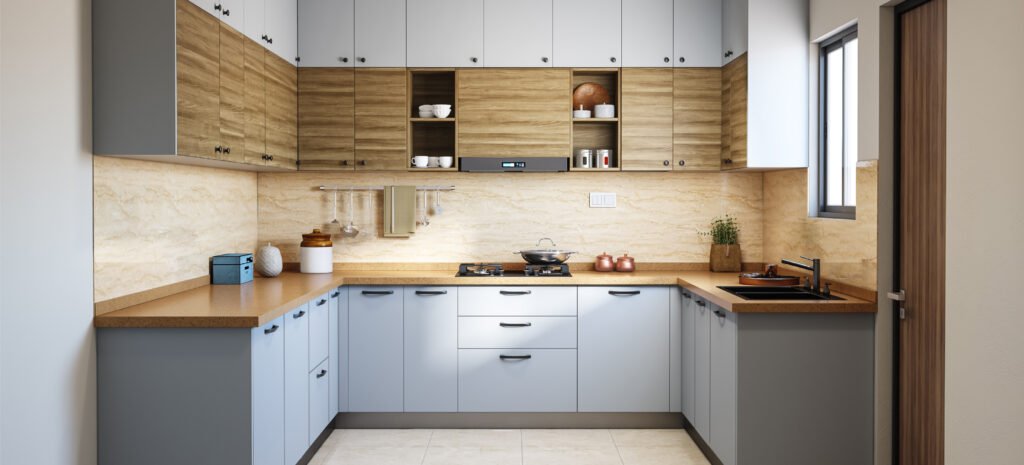
- U-Shape Layout: Ideal for larger kitchens, providing extensive countertop and storage areas.
- Parallel or Galley Layout: Efficient for high-traffic kitchens with separate wet and dry zones.
- Island Layout: Adds workspace and serves as a social or dining area in open-plan homes.
3.2 Budget Planning
Budget depends on materials, finishes, and accessories. A basic modular setup may start from $3,000, while high-end designs with premium hardware and built-in appliances can exceed $10,000. Allocating separate budgets for cabinetry, countertops, and electricals helps maintain cost control.
4. Materials Used in Modular Kitchen Installation
Choosing the right materials ensures durability, aesthetics, and resistance to moisture, heat, and wear.
4.1 Core Materials
- Plywood: Preferred for strength and resistance to moisture.
- MDF (Medium-Density Fiberboard): Smooth surface ideal for painted finishes, but less moisture-resistant.
- Particle Board: Budget-friendly but suitable only for dry areas.
- Marine Ply: Best suited for wet zones like under-sink cabinets due to high water resistance.
4.2 Shutter and Finish Options
- Laminates: Wide range of colors and textures, easy to clean.
- Acrylic: High-gloss finish with a premium look.
- Membrane: Smooth surface with curved edges; resistant to peeling.
- PU Coating: Provides a glossy, durable, and elegant surface.
4.3 Countertop Materials
- Granite: Extremely durable and affordable.
- Quartz: Elegant, non-porous, and easy to maintain.
- Marble: Premium option, though requires sealing to prevent stains.
- Solid Surface (Corian): Seamless and customizable, suitable for modern kitchens.
5. Modular Kitchen Installation Process
The modular kitchen installation process typically follows several coordinated steps, ensuring precision and quality at every stage.
5.1 Site Preparation
Before installation, ensure the kitchen area is cleaned, walls are finished, and electrical and plumbing work is completed. Check that all power points and water connections are aligned with the kitchen layout plan.
5.2 Base Unit Installation
Installation begins with placing base cabinets along the designated wall or layout. Technicians level the units properly using adjustable legs to prevent misalignment.
5.3 Wall Units and Tall Cabinets
Next, wall-mounted cabinets and tall storage units are fixed. Wall anchors and support brackets ensure that upper cabinets can safely bear the load of utensils and appliances.
5.4 Countertop Placement
Countertops are measured and installed after the base units are fixed. A skilled installer seals joints to prevent water leakage and maintain a uniform finish.
5.5 Hardware and Fittings
Soft-close hinges, drawer channels, pull-out baskets, and corner units are fitted. Modern hardware enhances usability and extends cabinet life.
5.6 Electrical and Appliance Integration
Appliances like ovens, dishwashers, hobs, and chimneys are integrated according to the wiring plan. Proper ventilation and exhaust placement are critical at this stage.
5.7 Final Finishing and Cleaning
After assembling all units, technicians clean surfaces, test drawer mechanisms, and ensure proper alignment. The kitchen is then ready for use after a thorough quality inspection.
6. Essential Accessories and Storage Solutions
Accessories enhance usability and storage efficiency in a modular kitchen. Popular options include:
- Pull-out baskets and organizers for utensils.
- Corner carousels and magic corners for hidden spaces.
- Cutlery trays, spice racks, and under-sink pull-outs.
- Vertical bottle pull-outs and pantry units.
- Soft-close drawers and hydraulic lift-up shutters.
These features not only improve accessibility but also help maintain a clutter-free kitchen environment.
7. Lighting and Electrical Planning
Proper lighting enhances both functionality and aesthetics. A modular kitchen benefits from layered lighting that includes:
- Task Lighting: Focused illumination under cabinets for cooking areas.
- Ambient Lighting: Ceiling or recessed lights for overall brightness.
- Accent Lighting: LED strips for highlighting shelves and decor panels.
Additionally, plan adequate sockets for appliances, ensuring circuits are safe and grounded. Integrating smart switches or voice-controlled lighting adds convenience and energy efficiency.
8. Common Mistakes During Modular Kitchen Installation
Avoiding common installation mistakes ensures a long-lasting and functional setup:
- Ignoring accurate measurements before manufacturing modules.
- Poor placement of sink and hob disrupting workflow.
- Insufficient ventilation leading to moisture buildup.
- Overlooking load-bearing walls when fixing heavy cabinets.
- Using low-quality hardware or adhesives.
9. Cost Breakdown of Modular Kitchen Installation
The cost of modular kitchen installation varies by design complexity, material quality, and labor charges. Below is an approximate breakdown:
- Cabinetry and Carcass: 40–50% of total cost.
- Countertop and Backsplash: 15–20%.
- Hardware and Accessories: 10–15%.
- Appliances and Fittings: 15–25%.
Professional installation costs may range from $500 to $2,000, depending on the region and project scope. Investing in branded hardware and skilled labor ensures longevity and better finish quality.
10. Modular Kitchen Maintenance Tips
To extend the life and appearance of your modular kitchen, regular maintenance is essential:
- Wipe countertops and cabinets daily to remove grease and dust.
- Avoid excessive water contact on wooden surfaces.
- Use mild detergents for cleaning laminate or acrylic finishes.
- Check hinges and drawers periodically for alignment.
- Ensure proper ventilation to prevent moisture accumulation.
11. Safety and Installation Standards
Modular kitchen installation should comply with safety norms for electricals, plumbing, and fire prevention. Use flame-resistant materials for areas near stoves and ensure exhaust systems function efficiently. Professional installers should follow manufacturer specifications for wiring and cabinet load limits to avoid future hazards.
12. Modern Trends in Modular Kitchen Design
Contemporary modular kitchens focus on sustainability, technology, and minimalism. Some notable trends include:
- Handleless Cabinets: Sleek designs with push-to-open or recessed handles.
- Smart Kitchens: Integration with IoT-enabled appliances and lighting.
- Matte Finishes: Elegant, fingerprint-resistant surfaces.
- Eco-Friendly Materials: Use of recycled boards and water-based coatings.
- Open Shelving: Combining functionality with decorative display areas.
13. Professional Installation vs DIY Assembly
While modular kitchens are designed for ease of assembly, professional installation ensures precise alignment, durability, and compliance with safety standards.
| Aspect | DIY Installation | Professional Installation |
|---|---|---|
| Time | May take several days | Completed within 1–2 days |
| Accuracy | Depends on skill level | Ensured by experienced technicians |
| Warranty | May be void if self-installed | Retained under professional setup |
| Safety | Risk of improper fixing | Follows certified installation standards |
14. Environmental Considerations
Many manufacturers now prioritize eco-friendly practices, such as using FSC-certified wood, low-emission adhesives, and energy-efficient production. Homeowners can further reduce environmental impact by selecting LED lighting and water-saving fixtures within their kitchens.
15. Conclusion
Installing a modular kitchen transforms the way a space functions, offering efficiency, elegance, and comfort. From choosing the right materials and layout to ensuring professional installation and maintenance, each step contributes to a kitchen that’s both practical and visually pleasing. With evolving designs, smart technology, and sustainable materials, modular kitchens continue to redefine modern living.
Whether you’re upgrading an old setup or designing a new home, understanding the complete installation process helps make informed decisions that align with your budget, lifestyle, and aesthetic goals.
Disclaimer: This article is for informational purposes only. Always hire certified professionals for modular kitchen installation to ensure safety, warranty compliance, and long-term durability.
© 2025 Modular Design Insights. All rights reserved.


